

Rigid Boxes: How They Are Built and Specified
By Editorial teamUpdated 4 min read
The short answer
Rigid boxes are set-up boxes made of thick greyboard wrapped in printed or specialty paper, delivered already assembled. They settle the choice between a folding carton and a box that holds its own shape: choose rigid when the box is part of how the product is presented, as with electronics, luxury cosmetics, jewelry and high-end gift sets.

How is a rigid box put together?
The core is greyboard, also called chipboard: a dense board 1.5–2.5 mm thick. Rigid board is specified in millimeters, not the points used for the thin paperboard of folding cartons, and it is cut and joined into a lid, base, tray or case before any paper goes on.
The wrap is a separate sheet, printed by litho in full CMYK plus spot colors and then glued over the board. The board gives the box its shape and stiffness, while the paper is the face you see and touch, so the two are chosen separately: one for structure, one for look and feel.
Inside, an insert of foam, molded pulp or paperboard holds the product in a fixed position away from the walls. An insert has to match the product's exact size, so the product is measured first and the insert is cut to it. The insert is part of the build, so it is specified together with the box rather than added later.
Which rigid box styles are there?
Lid and base, also called two-piece, is the classic build: a lift-off lid sits over a separate base. A shoulder-neck variant adds a rim to the base that the lid fits over.
Book-style boxes have a hinged flap that opens like a book cover, with the base fixed inside the case. The flap often closes with a magnet set into the board, which is why this style is often called a magnetic closure box.
Drawer, or slide, boxes have a tray that slides out of a sleeve. The reveal comes from pulling the tray, which suits jewelry and gifts.
How do you choose a rigid box for your product?
Start with the size. Rigid boxes are listed from 4 x 4 x 2 in up to 15 x 11 x 5 in, so check that your product and its insert sit within that range. Each box is quoted to your build.
Then decide how the box should look and feel. Because the wrap is printed separately and then applied to the board, it can be finished before it goes on: matte laminate, soft-touch laminate, foil stamping, embossing, debossing, spot UV and a die-cut window patched with clear film. Soft-touch gives a velvety matte feel but shows fingerprints and scuffs on dark, high-coverage designs. Foil suits metallic logos, edges and accents that catch the light. An emboss lifts a logo out of the surface. A deboss presses it in.
The paper sets the character too. Printed art paper carries full-color artwork, while textured, linen-look and leatherette-look papers give a surface you notice by touch before you read the print.
What should you specify before you order?
Send these details with your request, so your quote covers the box you mean:
- Size: length, width and depth, measured from the product and its insert, not estimated.
- Board: a greyboard thickness from 1.5–2.5 mm, with thicker board for a larger or heavier box.
- Wrap material: white or kraft. Ink looks softer on uncoated kraft than on bright white paper.
- Wrap paper: one that suits wrapping. A paper that is too stiff, too thin, textured or heavily coated for the corner is the one to rule out.
- Artwork: the printed wrap folds around the board, so the art allows for the turn-in at each edge. Foil, emboss, deboss and spot UV each go on their own named layer, and images are supplied at full print resolution at their final size.
Formats in this guide
How each format is built and what you can choose. Each is made to your build and quoted for it.
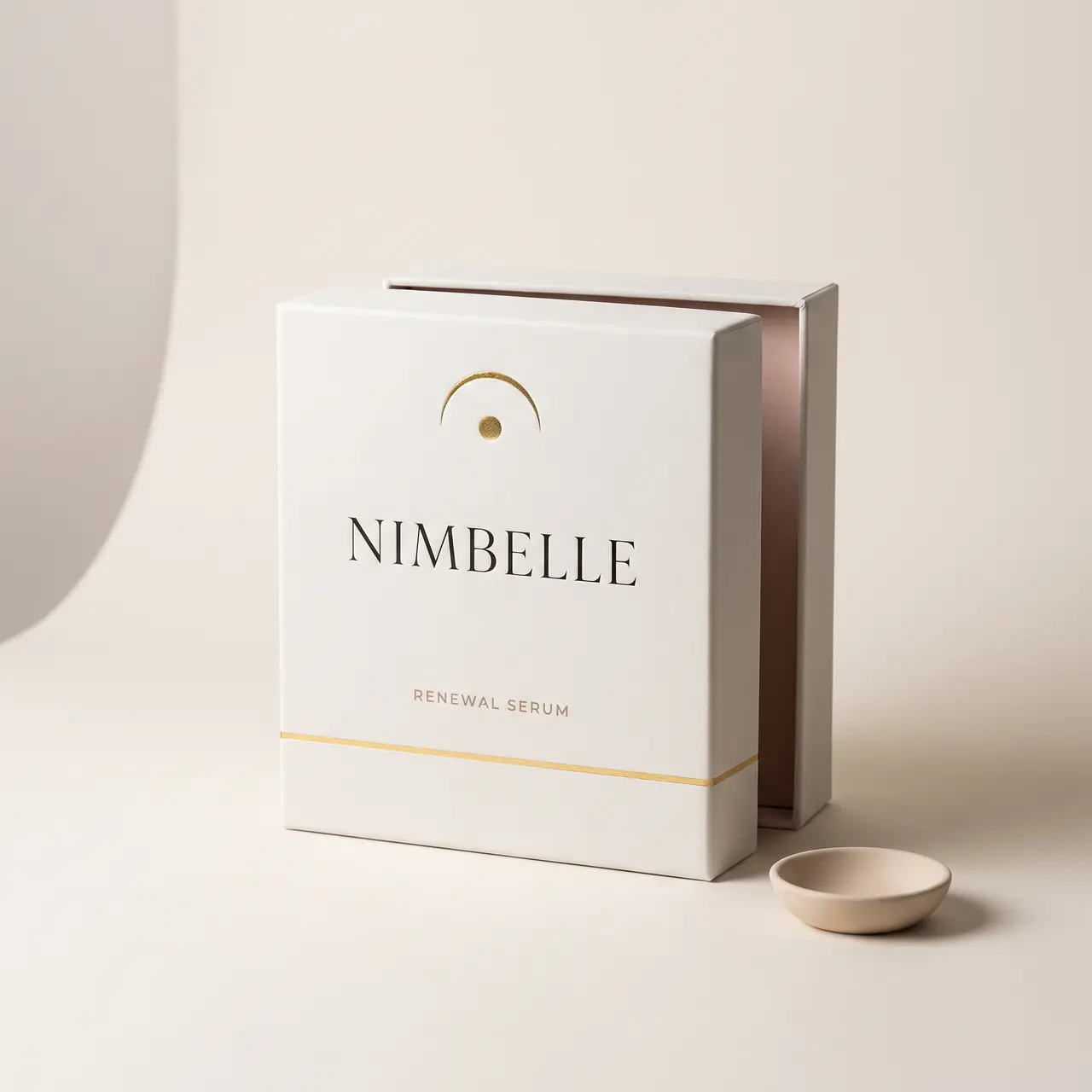
Rigid Boxes
Wrapped setup box
- Sizes
- 4 × 4 × 2 in up to 15 × 11 × 5 in
- Material
- Rigid greyboard, printed-paper wrapped
- Closure
- Lift-off lid, magnetic book-style, or drawer
- Board or film
- 1.5–2.5mm rigid greyboard
- Litho-laminated wrap, full CMYK + spot
- Inserts
- Foam, molded pulp, or paperboard
- Materials
- White, Kraft
- Finishes
- Matte laminate, Soft-touch laminate, Foil stamp, Emboss / deboss / spot-UV, Die-cut window patch
Quoted to your build

Questions
What makes a rigid box wrap bubble or lift?
What goes wrong at the corners of a rigid box?
Put it to work
See each format's sizes, materials and finishes on its page, then send your build for a quote.