

Rigid Box Construction: Board, Wrap and Lid Styles
By Editorial teamUpdated 4 min read
The short answer
Rigid box construction is thick greyboard, also called chipboard, cut and formed into box shells and wrapped in printed or specialty paper, then shipped already assembled rather than flat. It settles one choice for your packaging: a box with fixed walls that never fold down, against a folding carton or mailer box that ships flat and is set up at packing.

What are the layers of a rigid box?
The board is rigid greyboard, a dense sheet far thicker than folding-carton paperboard, which is why its thickness is given in millimeters rather than points. It is cut to the box's flat shape, folded up at the walls and joined at the corners, so each shell stands on its own before anything covers it.
The wrap is a separate sheet, printed before it ever meets the board. It is glued over the outside of each shell, and at every open edge it folds over the rim and down the inside wall. That fold is the turn-in, and it is why your artwork runs past the visible face: whatever sits at the edge carries over the rim and shows on the inside.
Inside, the box can take an insert of foam, molded pulp or paperboard that holds the product in a fixed position away from the walls. An insert has to match the product's exact size, so the product is measured first.
Which rigid box style suits your product?
Start with how the box opens, because the closure decides the structure. The lift-off lid over a base, the two-piece build, is the classic: the lid drops over the base walls and lifts straight off. Shoulder-neck variants add a rim, a neck that rises from the base inside the lid, so the lid closes down onto a shoulder and the neck comes into view once the lid comes off. A magnetic book-style box opens like a cover along one edge, and a drawer box slides out of an outer shell.
Then choose the wrap surface. White suits full-color art and photographs, because CMYK dots print brightest on a white face. Kraft keeps a natural brown look, and ink printed on it looks softer than on bright white.
Last, weigh the product. A heavier product calls for the thicker end of the board range and usually an insert that holds it in place, so plan the board, the insert and the box together.
What should you specify for a rigid box?
Give each of these when you ask for a quote:
- Size: the range runs from 4 × 4 × 2 in up to 15 × 11 × 5 in; these are listed sizes, so send your product's own measurements with them.
- Board: rigid greyboard, 1.5–2.5mm thick.
- Wrap paper: printed art paper, a textured paper, a linen-look paper or a leatherette-look paper.
- Print: the wrap is printed by offset litho in full CMYK plus spot colors, then applied to the board.
- Finishes: matte laminate, soft-touch laminate, foil stamp, emboss, deboss or spot UV.
For spot colors, give the Pantone number with its C or U suffix: the same number looks different on coated white paper and on kraft. A spot color is one premixed ink, mixed to its number rather than built from CMYK dots.
In the artwork file, put each finish (foil, emboss, deboss, spot UV) on its own named layer, since each is applied by separate tooling after the ink prints. Supply images at full print resolution at their final size.
What mistakes do buyers make with rigid boxes?
The first is reaching for finishes before the board. Board weight carries the premium impression first: a thicker greyboard is what the hand reads when it lifts the box. Foil, soft-touch and spot UV amplify that impression; they do not replace it, so settle the board thickness before you add finishes.
The second is fine detail in an emboss. An emboss raises the wrap paper between a matched pair of metal dies, and fine lines and small type flatten out, so keep embossed shapes bold. Foil asks for the same: bold detail, smooth coated paper and no large solids.
The third is pairing finishes and papers that work against each other. Spot UV does little on uncoated wrap paper and shows best as gloss over a matte laminate. Soft-touch shows fingerprints and scuffs on dark, high-coverage designs, and foil or spot UV laid over soft-touch needs an adhesion test first.
Formats in this guide
How each format is built and what you can choose. Each is made to your build and quoted for it.
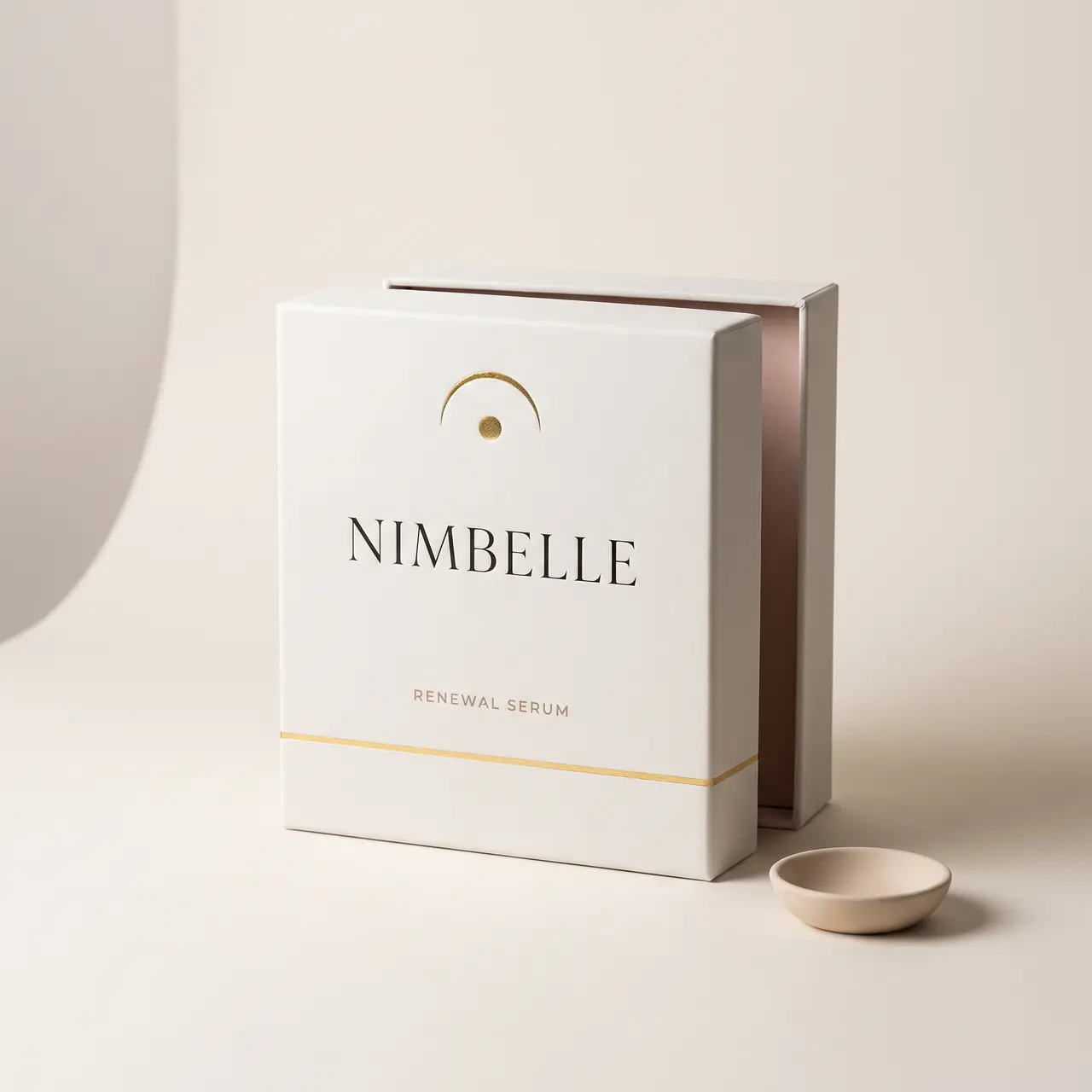
Rigid Boxes
Wrapped setup box
- Sizes
- 4 × 4 × 2 in up to 15 × 11 × 5 in
- Material
- Rigid greyboard, printed-paper wrapped
- Closure
- Lift-off lid, magnetic book-style, or drawer
- Board or film
- 1.5–2.5mm rigid greyboard
- Litho-laminated wrap, full CMYK + spot
- Inserts
- Foam, molded pulp, or paperboard
- Materials
- White, Kraft
- Finishes
- Matte laminate, Soft-touch laminate, Foil stamp, Emboss / deboss / spot-UV, Die-cut window patch
Quoted to your build

Questions
What products are rigid boxes used for?
Is a sleeve or belly band the same as a rigid box?
Can a rigid box have a window?
Put it to work
See each format's sizes, materials and finishes on its page, then send your build for a quote.