

GuideMaterials and barrier
Mylar bag vs stand-up pouch: which do you need?
Mylar is a film. Stand-up is a shape. Here is how to choose.

By Editorial teamPublished Updated 2 min read6 sources
Short answer
Mylar describes the film; stand-up pouch describes the shape. A mylar bag uses a metallized or foil laminate that blocks light, oxygen and moisture, and it can be made as a stand-up pouch. Choose mylar when shelf life matters most, and clear film with a window when shoppers need to see the product.
- Mylar is a film and stand-up is a shape, so one pouch can be both.
- Metallized and foil films block light; clear film lets shoppers see the product.
- A metallized stand-up pouch gives you the barrier and the shape, without a window.
On this page (6)

At a glance: barrier or visibility
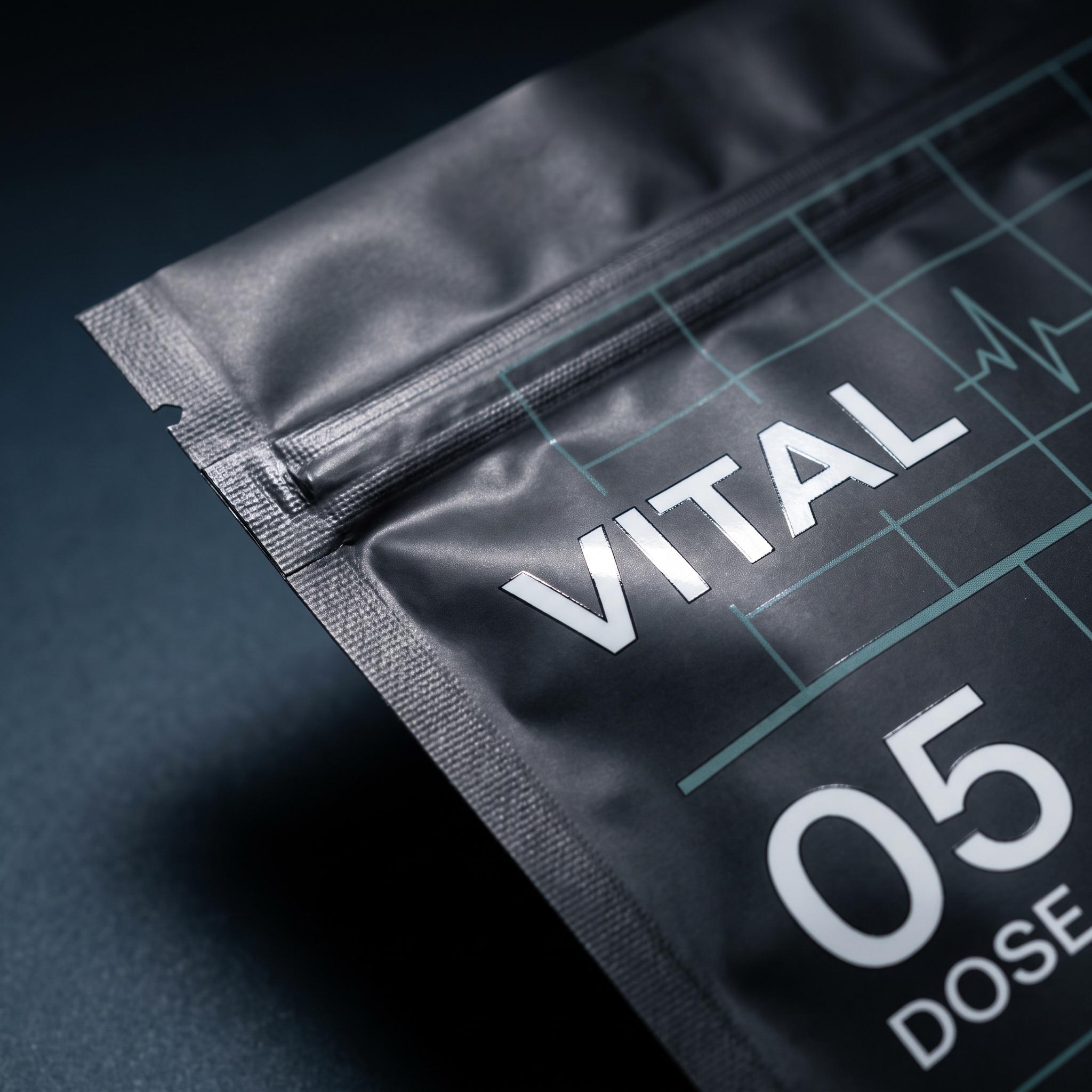
The question mixes two kinds of word. Mylar names a film: a metallized or foil laminate built to block light and slow oxygen and moisture. Stand-up names a shape: a pouch with a folded base that stands on a shelf. So a mylar bag can be a stand-up pouch, and a stand-up pouch can be clear.
The real choice is barrier against visibility. If light, oxygen or moisture would spoil your product before it sells, choose a metallized or foil film. If shoppers buy with their eyes and the product sells fast, choose a clear film, often with a window.
Barrier is measured, not guessed. Labs report a film's oxygen transmission rate (OTR) and water vapor transmission rate (WVTR), and lower numbers mean a better barrier. Ask a supplier for both before you compare films; barrier film explained walks through what they mean.[4][5]

Definition
Mylar bag
Also called metallized barrier bag, foil bag
A mylar bag is a pouch made from metallized PET or foil laminate that blocks light and sharply cuts oxygen and moisture transmission.
Our custom barrier films run about 3.5-5 mil, and heavier gauges exist. Mylar is a DuPont Teijin Films trademark; the trade uses it for any metallized or foil bag.

Definition
Stand-up pouch
Also called doypack, gusseted pouch
A stand-up pouch is a pouch with a bottom gusset (a folded base that opens when filled) so it stands on a shelf.
It can be made from clear, metallized, kraft or mylar films, so the shape says nothing about the barrier.

Compared: mylar bag and clear stand-up pouch
Mylar bag and clear stand-up pouch compared, film by filmValues as of
| Compared | Mylar bag | Clear stand-up pouch |
|---|---|---|
| Film | Metallized PET or aluminum foil, laminated to a PE sealant | Clear PET laminated to a PE sealant |
| Light | Blocked by the metal or foil layer | Passes through |
| Oxygen and moisture barrier | High (relative to clear film) | Moderate |
| Window | Not offered on our custom mylar bags: a clear panel would let light in | Yes: a clear front or a die-cut window |
| Child-resistant zipper (no test report yet) | Optional | Optional |
| Thickness | About 3.5-5 mil for our custom films; heavier gauges exist | About 3.5-5 mil for our custom films |
| Shelf life | Depends on the product, the fill and the seal: no film promises a shelf life | Depends on the product: suits products sold within weeks |
| Custom minimum | Set in your quote | From 100 units |
| Custom price from | Priced by quote | $0.84 each at 500 units, 4.375 x 6 x 2 in |
The film detail A metal layer thinner than a hair is what blocks the light.
Metallized film carries a vapor-deposited aluminum layer on PET; a foil laminate uses a sheet of aluminum foil instead.
- Outside: Printed PET
- Barrier: Metallized PET or foil
- Inside: PE sealant

- 1. Clear: PET / PE
- 2. Metallized: PET / MET-PET / PE
- 3. Foil: PET / foil / PE
- 4. Light passes through
- 5. Metal layer blocks light
- 6. Foil layer blocks light
- 7. Inner layer: PE sealant, the side that touches the product
- Film layers: printed PET outside, PE sealant inside
- The metallized layer: metal deposited on a PET film
- The aluminum foil layer
Describe this diagram
Three pouch films cut through and drawn side by side, not to scale. On the left, a clear film has two layers: printed PET on the outside and PE sealant on the inside, and light passes through it. In the middle, a metallized film adds a third layer between them, a PET film with a thin metal layer deposited on it, which blocks light. On the right, a foil film puts a layer of aluminum foil in the middle instead, which also blocks light. In all three, the inner PE layer is the sealant that touches the product and melts to itself to make the seals.
When a clear stand-up pouch wins
A window is a trust signal. Shoppers believe what they can see, and a clear front shows snacks, granola, coffee beans or pet treats the way they look in the bowl.
Clear film also suits products that sell quickly and do not mind light. A standard clear laminate gives a moderate oxygen and moisture barrier, which is enough for a product eaten within weeks. Clear and lightly metallized films generally cost less than heavy foil laminates, so for the right product you spend less and show more. Custom stand-up pouches take a clear, metallized, white or kraft film, with a window as an option.

Choose in four questions
Answer each question for your own product, then count the yes answers.
- Is it light-sensitive, like vitamins, oils, botanicals or coffee?
- Does it need more than 6 months of shelf life?
- Is it a regulated product that may need a closure young children cannot open?
- Do shoppers need to see the product before they buy?
Two or more yes answers among the first three point to mylar. A strong yes on the last points to clear film with a window. If both apply, a metallized stand-up pouch without a window is the usual answer: barrier first, then shape, then finish. Custom mylar bags are quoted to your product; oxygen absorbers and the types of mylar bags are the next reads.

- Instant prices on 7 formats
- Ships within 1-2 business days
- US company, US-based account owner
Mylar bag and stand-up pouch questions
That depends on the film, so we state food contact per material, and no such statement is on file for our films yet. FDA rules list the plastics allowed in contact with food, including PET (21 CFR 177.1630) and polyethylene (21 CFR 177.1520). Ask a supplier which rule covers each layer of the film you are buying.
It can, but a window is a clear panel, so light reaches the product there and the barrier is lower at the window. Our custom mylar bags are opaque. If shoppers need to see the product, a clear or windowed stand-up pouch is the better fit.
Not always. A mylar bag slows the oxygen coming in, but it cannot remove the oxygen sealed inside with the product. For dried foods and long storage, an oxygen absorber takes up that leftover oxygen; oxygen absorbers for pouches covers when to use one.
Most stand-up pouches are laminates of different plastics, and metallized or foil layers add another material, which makes them hard to recycle. We make no recycling claim for our films. Ask your local program what it takes before you print a recycling mark on a pouch.
Clear and lightly metallized films generally cost less than heavy foil laminates. A 4.375 x 6 x 2 in custom stand-up pouch is $0.84 each at 500 units on our price ladder; custom mylar bags are quoted, so compare the two at your own size and run.
Sources and standards
- [1]
The FDA keeps an inventory of the substances Title 21 of the Code of Federal Regulations authorizes for use in contact with food.
U.S. Food and Drug Administration, Inventory of Food Contact Substances Listed in 21 CFR (external site), published .
Checked
- [2]
Polyethylene phthalate (PET) polymers may be used in films and other plastics that contact food under the conditions this section sets.
Legal Information Institute, Cornell Law School (the Code of Federal Regulations), 21 CFR 177.1630, Polyethylene phthalate polymers (external site).
Checked
- [3]
The olefin polymers this section lists, polyethylene among them, may be used in articles that contact food, subject to its conditions.
Legal Information Institute, Cornell Law School (the Code of Federal Regulations), 21 CFR 177.1520, Olefin polymers (external site).
Checked
- [4]
The test method measures the steady-state rate at which oxygen passes through plastic film, sheeting and laminates: the oxygen transmission rate (OTR).
ASTM International, ASTM D3985-17, Standard Test Method for Oxygen Gas Transmission Rate Through Plastic Film and Sheeting Using a Coulometric Sensor (external site).
Checked
- [5]
The test method measures the rate at which water vapor passes through flexible barrier materials: the water vapor transmission rate (WVTR).
ASTM International, ASTM F1249-20, Standard Test Method for Water Vapor Transmission Rate Through Plastic Film and Sheeting Using a Modulated Infrared Sensor (external site).
Checked
- [6]
The federal rules for special packaging that young children cannot open: which substances require it (1700.14), its standards (1700.15) and how it is tested (1700.20).
Legal Information Institute, Cornell Law School (the Code of Federal Regulations), 16 CFR part 1700, Poison Prevention Packaging (external site).
Checked
Keep reading
- GuideMaterials and barrier
Does coffee packaging need a degassing valve?
- GuideBuying, pricing and minimums
Why does packaging cost less per unit at larger runs?
Know your film? Price the pouch.
