

What is MOQ in packaging?
Minimum order quantities exist for a reason — but there are real levers to bring them down. Five practical ways to start small without overpaying.
Published · Updated
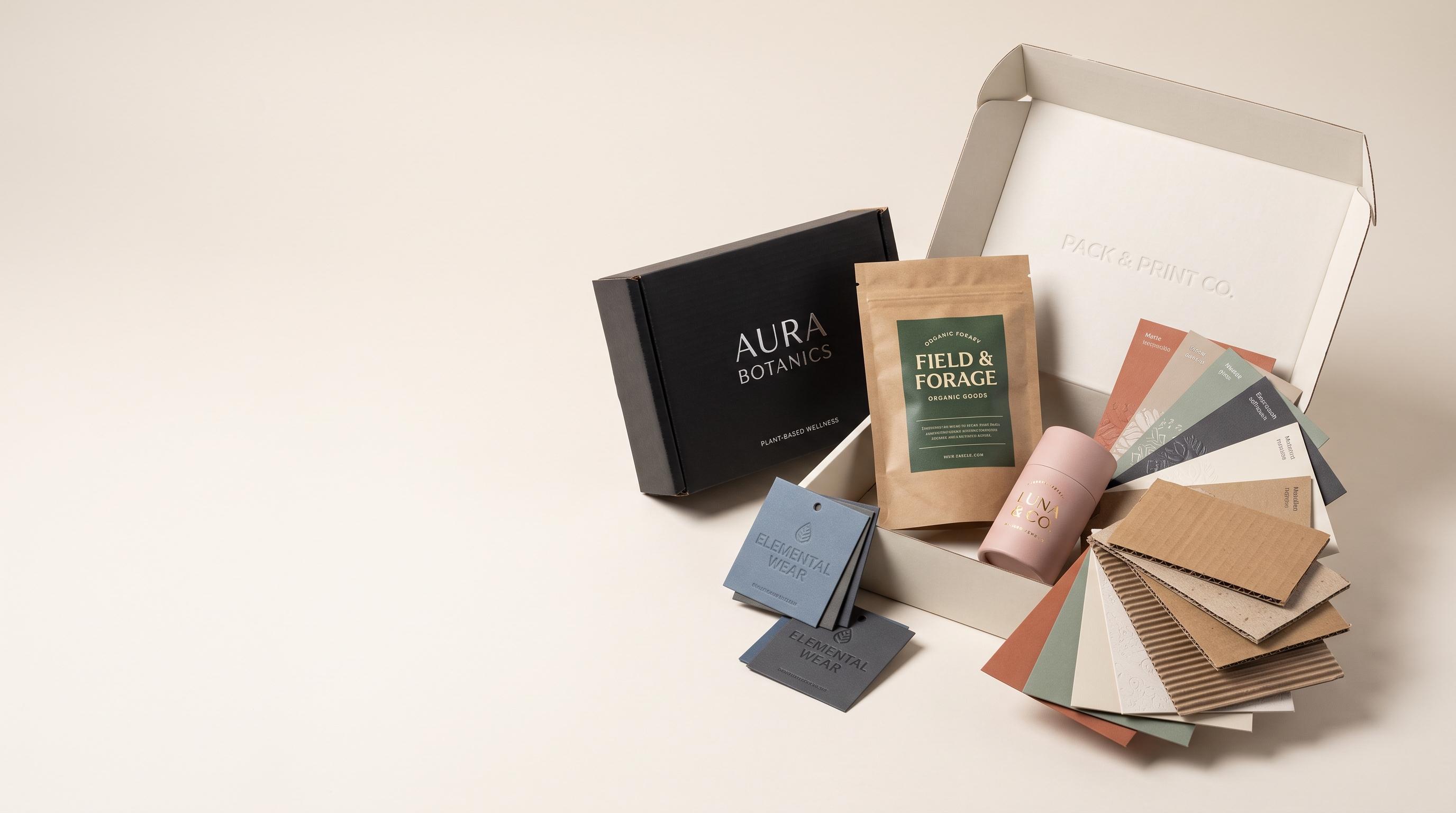
Why MOQs exist in the first place
A minimum order quantity isn't arbitrary — it's the point at which the fixed costs of a production run spread thin enough to make the job economical. Those fixed costs include tooling, printing plates, cutting dies, machine setup, and the labor to get a job on and off the press. On processes that require physical plates or custom dies, those costs are real and land whether you order 500 units or 5,000, so the supplier sets a floor that keeps the per-unit price from ballooning. Understanding that is the whole key to lowering a MOQ: you're not haggling over an arbitrary number, you're trying to reduce or avoid the fixed setup costs that force the minimum up in the first place. Once you see MOQ as a symptom of setup cost rather than a rule handed down for its own sake, the levers to bring it down become obvious.
Choose digital-friendly formats
The single biggest lever is print method. Digital printing uses no plates and no cutting-die setup, so it carries far lower minimums than plate-based flexo or offset — often a small fraction of them. Choosing formats and finishes that run digitally — and many mailers, cartons, and pouches do at low volume — lets you order dozens or low hundreds of fully-printed units instead of thousands. The visual quality is excellent for most brands, especially on photographic or full-color art where digital genuinely shines. When you're launching or testing a design and cash is tight, the most useful question you can ask a supplier is a specific one: what would this job cost printed digitally versus conventionally, at the quantity I actually want? The MOQ and up-front cost difference between the two routes is frequently dramatic, and it's often the difference between launching this month and waiting until you can afford a big conventional run.
Simplify: fewer SKUs, shared structures
Complexity multiplies minimums, because every unique variation is its own setup with its own floor. Every distinct size, every additional print color, every separate cutting die is another fixed cost to amortize. You can shrink your total minimums by deliberately simplifying: use one box size across several products, standardize a tight color palette, or brand with a printed sleeve or label wrapped over a common base rather than tooling a fully custom box for every SKU. One shared structure, dressed differently, spreads a single setup across your whole line — so you order more of fewer things, and each one reaches its MOQ threshold far sooner. This is one of the most overlooked cost levers for small brands: the instinct is to make everything bespoke, but a little standardization underneath the branding can cut both your minimums and your per-unit cost at the same time, without a customer ever noticing.
Bridge with stock, flip to custom later
You also don't have to solve MOQ in a single leap from zero to a full custom run. Start on unbranded stock packaging — available with no minimum and ready to ship in a day or two — to launch, test, and validate real demand, then move to a custom printed run once your volume justifies the setup cost. Pairing the two lets you be in market this week and fully branded once the numbers are there, instead of stalling either on cash or on lead time. The best suppliers pair each stock item with its custom counterpart — the same size and format in a blank and a printed version — so the eventual switch is a straightforward upgrade rather than a re-sourcing project. Used this way, stock isn't a compromise; it's a bridge that lets a small brand behave like a bigger one while it grows into the volumes that make custom cheap.
Related: Plain mailer boxes, Blank folding cartons, Custom packaging for small business
Formats this guide covers
Configure material and finish and watch the per-unit price move on the instant formats; the rest are quoted.

Custom Mailer Boxes
The unboxing box — full color, edge to edge.

Custom Product Sleeves & Belly Bands
The low-cost brand wrap for jars, bars, and boxes.

Custom Poly Mailers
Lightweight e-comm mailers, printed full color.
Stop guessing. See your real price.
Configure the format, material, and finish from this guide: on the instant formats the per-unit price updates as you go, with no plate, die, or ink fees.